
Standing With Nepal: Trek Relief's Response to the 2026 Flash Flood & Mudslide
What Happened
The disaster began with a glacial lake outburst flood — a phenomenon increasingly linked to rising global temperatures and the accelerating melt of Himalayan glaciers. The initial surge created a debris dam downstream, which formed a barrier lake. On August 28, that barrier lake breached — briefly halting rescue operations across both Nepal and Tibet and raising fears of a second wave.
The destruction is staggering:
1,300+ confirmed killed · 5,500+ still missing
32 bridges destroyed
Nearly 40 kilometers of road washed away — including the entire road from Betrawati to the Rasuwagadhi border crossing
14 hydropower and solar projects damaged, affecting 748 megawatts of capacity
10,000+ households in need of emergency shelter
Waterborne disease risk rising as water and sanitation infrastructure fails
The worst-hit settlements include Timure and Syaphru Besi in Rasuwa district — communities that sit at the heart of one of Nepal's most beloved trekking regions, and at the heart of Trek Relief's decade of service in this country.
What This Place Means to Trek Relief
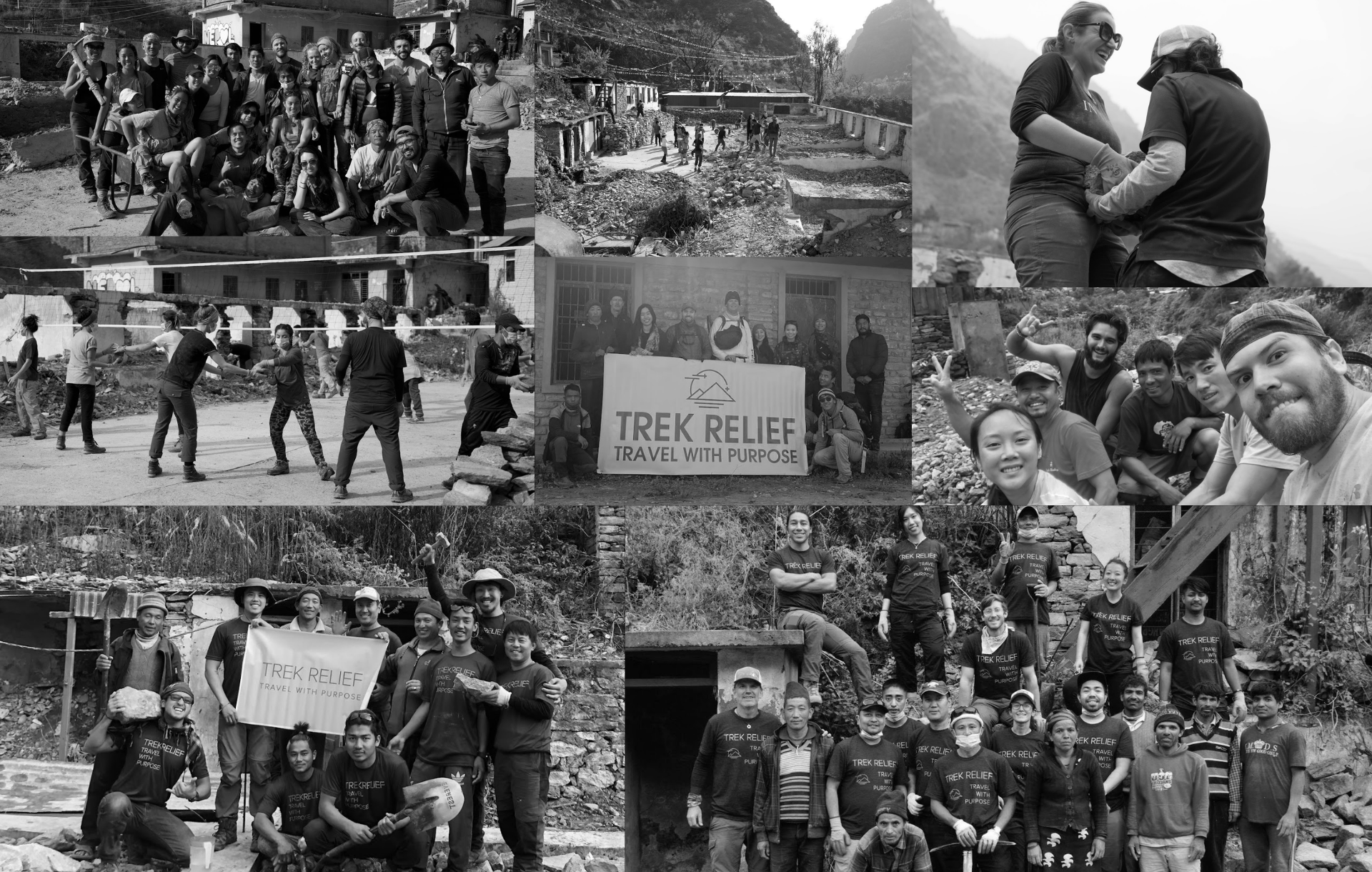
In 2016, in the aftermath of a devastating 7.8-magnitude earthquake, Trek Relief's first-ever team came to Nepal. They came not just to trek but to help. Over the course of three years and fourteen expeditions, they worked alongside the community of Syaphru Besi to rebuild a primary school that the earthquake had destroyed.
That school, the project that turned Trek Relief from a one-time fundraiser into a decade-long mission, is now gone.
The families who welcomed us into their homes, the guides who walked every trail with us, the children who grew up alongside our teams, they are living through something no one should have to face. And they are doing it while the world's largest carbon emitters continue largely unchanged.
Nepal contributes less than 0.1% of global carbon emissions. Yet it sits on the front lines of climate devastation, year after year, disaster after disaster. The glacial collapse that triggered this flood is not a random act of nature. It is the accelerating consequence of a warming planet, and the communities of the Langtang Valley are paying a price they did not create.
That is not a natural disaster. That is a moral failure.
What Trek Relief Is Doing
We have activated an emergency relief fundraiser in direct partnership with the Nepal Red Cross Society — the primary humanitarian organization responding on the ground right now.
The Nepal Red Cross Society is providing:
✔️ Immediate food distribution to displaced families
✔️ Emergency clean water access
✔️ Temporary shelter for the 10,000+ households affected
✔️ Search and rescue coordination across Rasuwa, Nuwakot, and Dhading districts
Every dollar donated through Trek Relief's emergency campaign goes directly to the Nepal Red Cross Society. No administrative fees. No delays. Straight to the ground.
This Is Why We Go Back
Trek Relief has always said that the communities we serve are not our projects, they are our partners. The people of Nepal didn't just receive our help over the past decade. They shaped us. They taught us what it means to show up with humility, to listen before acting, and to build something that lasts.
Right now, they need us to show up for them.
If you have ever donated to a Trek Relief trip, shared a post, encouraged someone to go, you are part of the community that built those relationships. And you are part of what can help rebuild what was lost.
Recovery from this disaster will take years. The immediate need is now.
How to Help
Donate directly:
Every dollar goes to the Nepal Red Cross Society for immediate food, clean water, and shelter.
Share this post:
The most powerful thing you can do right now is make sure the people in your life know what is happening. Share this blog, share our social posts, and keep Nepal visible.
Follow the situation:
We will continue to update our community as the situation develops and as recovery efforts begin. Follow us at @trekrelief for ongoing updates.
Nepal has given Trek Relief its purpose for 10 years. It is time to give something back.
